
Pajak
Changes to Company Information Under Minister of Law Regulation No. 49 of 2025: What Are the Implications for Tax Obligations?
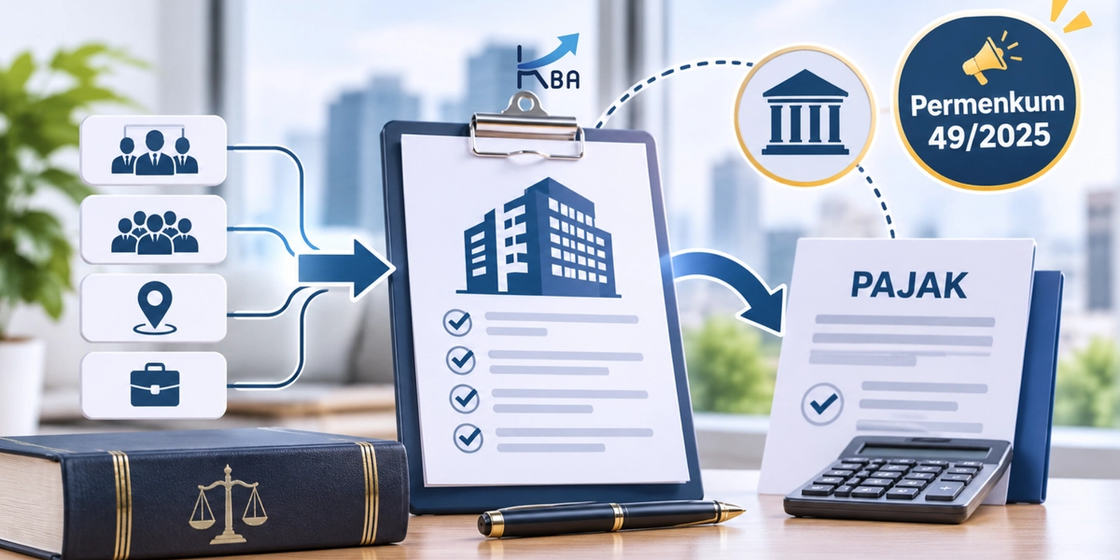
Changes to a company's information are not only related to its legal status but must also be followed by adjustments to its tax administration. Changes in directors, shareholders, registered addresses, or business activities must be reflected consistently in the company's tax records.
Minister of Law Regulation No. 49 of 2025 (Permenkum 49/2025) does not introduce any new types of taxes. However, this regulation highlights the importance of maintaining consistency between company information, bookkeeping, and tax compliance.
1. Ensuring Consistency Between Company Information and Tax Records
Every change to company information should be followed by a review of its tax administration records. The key information that needs to be checked includes:
- Company identity and registered address.
- Composition of directors and management.
- Shareholder information and beneficial ownership.
- Business activities.
- Taxpayer Identification Number (NPWP) and tax administration records.
Inconsistencies in company information may become a matter of concern in administrative processes and tax supervision by the Directorate General of Taxes (DJP). Therefore, any changes to company information should be followed by timely and proper updates to the relevant records.
2. Changes in Directors Do Not Automatically Eliminate Tax Obligations
The management of an active corporate taxpayer acts as its representative in exercising tax rights and fulfilling tax obligations. Under certain circumstances, a taxpayer's representative may be held personally and/or jointly liable for outstanding tax liabilities, unless they can prove that they could not reasonably be held responsible for such liabilities. It is important to understand that changes in directors or shareholders do not automatically eliminate tax obligations that arose before the changes took place. Therefore, companies must ensure that the appointment and dismissal of directors are carried out in accordance with the applicable procedures, followed by the necessary updates to company records and a clear transfer of administrative responsibilities.
3. Bookkeeping and Transaction Documents Must Be Consistent
In addition to maintaining accurate legal information, companies must ensure that their bookkeeping reflects their actual business conditions. Reconciliation should be performed by matching customer contracts, invoices, bank receipts, recorded revenue, and tax returns. The same principle applies to expenses, including supporting invoices, payment evidence, withholding tax certificates, and tax invoices where relevant. Companies should also separate personal transactions from business transactions and maintain complete supporting documentation. Consistent bookkeeping helps companies explain their transactions if discrepancies arise during tax supervision.
4. Understanding Tax Supervision and SP2DK
The Directorate General of Taxes (DJP) supervises taxpayers' compliance with their tax obligations, including through requests for clarification regarding specific data and/or information, known as SP2DK (Surat Permintaan Penjelasan atas Data dan/atau Keterangan). An SP2DK is issued when certain data or information requires clarification from a taxpayer. It is important to note that an SP2DK is neither a tax assessment letter nor a tax audit. If a company receives an SP2DK, it should review the relevant data, prepare supporting documents, and provide an accurate explanation based on the actual circumstances of the transactions.

5. What Companies Should Do
To maintain consistency between company information and tax compliance, companies should:
- Update company records whenever there are changes in directors, shareholders, registered addresses, or business activities.
- Ensure that tax administration records are consistent with the latest legal company information.
- Review ongoing tax obligations as well as liabilities arising before the changes.
- Maintain complete and traceable bookkeeping records and transaction documents.
- Ensure that company management understands its tax responsibilities in accordance with its respective roles.
Conclusion
Changes to company information must be followed by appropriate adjustments to tax administration to prevent data inconsistencies and potential difficulties in fulfilling tax obligations. Corporate compliance is not merely about updating legal documents. It also requires ensuring that bookkeeping, tax reporting, tax payments, and management responsibilities remain properly aligned.
Tax support for companies in Malang City and Malang Regency, from the KBA Consultant office in Kota Batu, is on the tax consultant in Malang page.